

to report «iusnews»;
Introduction: Breaking the Silence Beneath the Waves
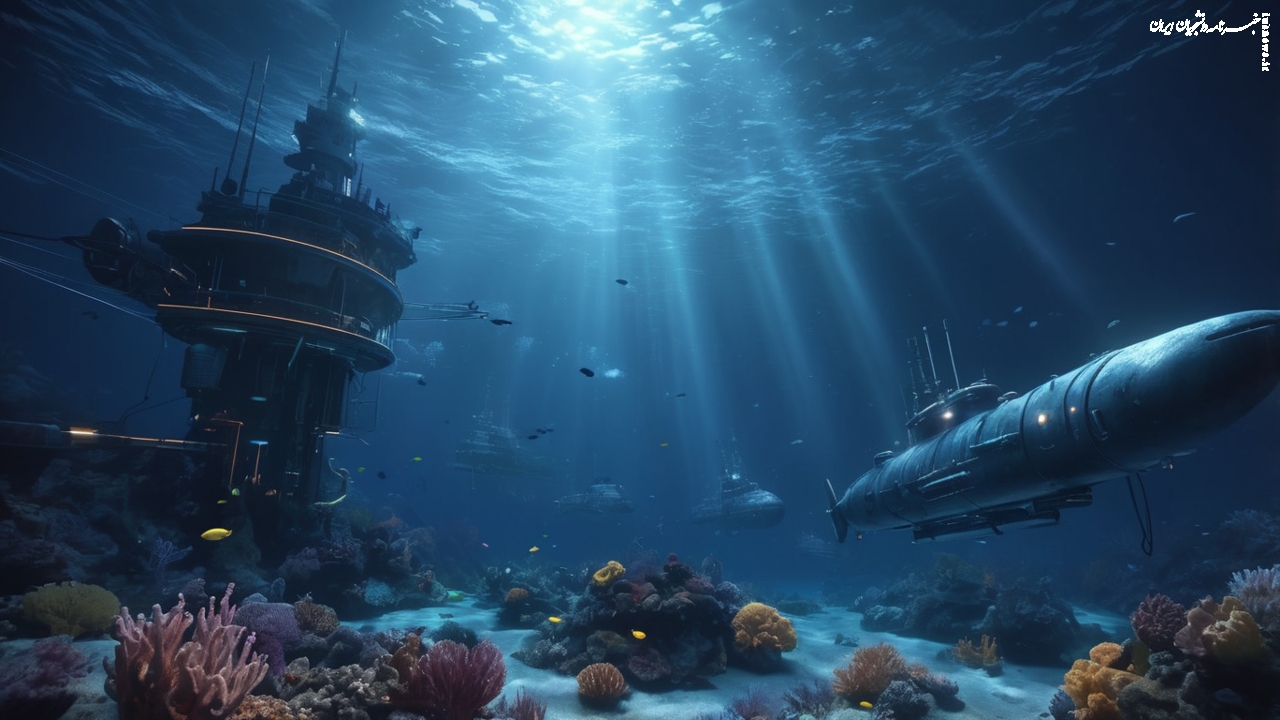
Beneath the ocean’s surface lies a world of mystery—a realm teeming with life and untapped resources, yet largely inaccessible due to one critical challenge: communication. How do submarines, research vessels, and underwater drones exchange information in an environment where traditional radio signals and Wi-Fi fail to penetrate? Marine & Maritime Communication Solutions Enter underwater communication technologies, a suite of groundbreaking innovations that are transforming the way we explore, navigate, and protect the deep. In this article, we’ll take a deep dive into the science, applications, and future of underwater communication, exploring how these technologies are unlocking the secrets of the ocean.
The Unique Challenges of Underwater Communication
Why Traditional Communication Technologies Fail
If you’ve ever tried using your smartphone underwater, you’ve already experienced one of the fundamental limitations of traditional communication technologies. Radio waves and Wi-Fi signals, which are the backbone of modern communication, don’t travel well through water due to its high density and conductivity. Marine & Maritime Communication Solutions These signals are absorbed or scattered, making them ineffective for underwater use. This creates a significant challenge for industries that rely on underwater operations, such as marine research, offshore energy, and military defense.
Unlike air or space, water is a dense medium that significantly attenuates electromagnetic signals. To overcome this, researchers have turned to alternative methods of communication, such as acoustics, optics, and magnetic induction—each with its own strengths and limitations. But why does underwater communication matter so much? Let’s explore its critical applications.

The High Stakes of Deep-Sea Connectivity
Underwater communication is essential for a wide range of applications, from monitoring marine ecosystems to coordinating offshore drilling operations. For example, oceanographers studying coral reefs rely on remotely operated vehicles (ROVs) equipped with communication systems to collect real-time data on water temperature, pH levels, and biodiversity. Marine & Maritime Communication Solutions Without reliable communication, these missions would be slow, inefficient, or even impossible.
Similarly, underwater communication is vital for military operations, where submarines need to exchange encrypted messages without surfacing and compromising their stealth. In disaster response scenarios, such as oil spills, underwater drones rely on real-time data transmission to assess environmental damage and guide cleanup efforts. The stakes couldn’t be higher—effective underwater communication can mean the difference between success and failure in critical missions.
How Underwater Communication Technologies Work
Acoustic Communication: The Backbone of Underwater Connectivity
Acoustic communication is the most widely used method for transmitting information underwater. It relies on sound waves, which travel efficiently through water, unlike electromagnetic signals. Acoustic modems convert digital data into sound waves, which are then transmitted and received by devices equipped with hydrophones—specialized underwater microphones. This technology is commonly used for applications such as submarine communication, ROV control, and underwater sensor networks.
However, acoustic communication is not without limitations. Sound waves are affected by factors such as water temperature, salinity, and pressure, which can distort signals over long distances. Additionally, acoustic systems have relatively low data transmission rates compared to terrestrial networks, making them less suitable for high-bandwidth applications like video streaming. Despite these challenges, acoustic technology remains the backbone of underwater communication due to its reliability and scalability.
Optical Communication: High-Speed Data Transmission
Optical communication is an emerging technology that uses light waves to transmit data underwater. Unlike acoustic communication, optical systems offer high data transmission rates, making them ideal for bandwidth-intensive applications. For example, underwater cameras and sensors equipped with optical communication can transmit high-resolution images and videos in real time, enabling detailed exploration of shipwrecks, marine habitats, or geological formations.
However, optical communication has a limited range and is highly sensitive to water clarity. In murky or turbid conditions, light waves are absorbed or scattered, reducing the effectiveness of optical systems. To address these limitations, researchers are developing hybrid systems that combine optical and acoustic technologies, leveraging the strengths of both methods for more robust communication solutions.
Magnetic Induction: A Niche but Promising Solution
Magnetic induction is a lesser-known method of underwater communication that uses electromagnetic fields to transmit data over short distances. This technology is particularly useful for applications where devices are in close proximity, such as underwater robots working collaboratively on a task. Magnetic induction is unaffected by water salinity or pressure, making it a reliable option in challenging environments.
While magnetic induction is not yet widely adopted, it holds promise for specialized applications, such as connecting devices in underwater factories or coordinating autonomous drones during deep-sea mining operations. As research continues, this technology could become a valuable addition to the underwater communication toolkit.
Real-World Applications of Underwater Communication Technologies
Case Study 1: Coordinating Search and Rescue Missions
In 2023, an international search and rescue mission was launched to locate a missing submarine off the coast of Norway. The operation involved multiple underwater drones equipped with acoustic communication systems, allowing them to share real-time data on sonar readings and underwater terrain. This seamless exchange of information enabled rescue teams to pinpoint the submarine’s location within hours, saving lives and demonstrating the critical role of underwater communication in emergency scenarios.
Case Study 2: Monitoring Marine Ecosystems in Real Time
Researchers studying the Great Barrier Reef have deployed underwater sensor networks that use acoustic communication to transmit data on water quality, coral health, and fish populations. These sensors provide continuous updates, enabling scientists to detect early signs of stress and implement conservation measures. For example, a sudden drop in oxygen levels detected by the sensors prompted researchers to deploy aeration systems, preventing mass coral bleaching. This real-time monitoring would not have been possible without advanced underwater communication technologies.

Challenges and Limitations of Underwater Communication
Environmental Factors
One of the biggest challenges in underwater communication is the variability of environmental conditions. Factors such as water temperature, salinity, and pressure can distort acoustic signals, while turbidity and light absorption affect optical systems. These limitations require researchers to develop adaptive technologies that can adjust to changing conditions in real time.
High Costs of Deployment
Underwater communication systems are expensive to develop, install, and maintain. For example, deploying an underwater acoustic network for a deep-sea mining operation can cost millions of dollars, making it inaccessible for smaller organizations. To address this, researchers are exploring cost-effective solutions, such as modular systems that can be scaled based on operational needs.
Bandwidth Limitations
Compared to terrestrial networks, underwater communication systems have relatively low data transmission rates. This limitation affects applications that require high-bandwidth connectivity, such as streaming video or transmitting large datasets. Researchers are working on hybrid systems that combine acoustic and optical technologies to overcome bandwidth constraints.
The Future of Underwater Communication Technologies
Advances in AI and Machine Learning
The integration of AI and machine learning into underwater communication systems is expected to revolutionize the field. AI algorithms can optimize signal processing, predict environmental changes, and enhance data transmission rates, making underwater communication more reliable and efficient. For example, AI-powered acoustic systems could automatically adjust signal frequency based on water conditions, ensuring uninterrupted communication during long missions.
Expanding Global Collaboration
As underwater communication technologies become more accessible, they are fostering global collaboration in fields like marine research, energy exploration, and environmental conservation. International initiatives, such as the Ocean Observatories Initiative, are leveraging underwater communication to create interconnected sensor networks that monitor ocean health on a global scale. These efforts are paving the way for a more sustainable and interconnected future.
Conclusion: Bridging the Gap Between Science and the Sea
Underwater communication technologies are breaking down barriers to deep-sea exploration, enabling scientists, engineers, and policymakers to better understand and protect our oceans. From acoustic modems to optical systems, Marine & Maritime Communication Solutions these innovations are transforming the way we interact with the underwater world, unlocking new opportunities for research, conservation, and industry. While challenges remain, the progress made in recent years is a testament to human ingenuity and our commitment to exploring the unknown.
Interested in learning more about underwater technology? Subscribe to our newsletter for expert insights, cutting-edge research, and practical applications that are shaping the future of marine science.
FAQ
What are the main types of underwater communication technologies?
The main types include acoustic communication, optical communication, and magnetic induction. Acoustic systems are widely used for long-range communication, while optical and magnetic induction technologies are suited for high-speed or short-distance applications.
Why can’t traditional communication methods like Wi-Fi work underwater?
Wi-Fi and radio signals rely on electromagnetic waves, which are absorbed or scattered by water due to its density and conductivity. Alternative methods like acoustics and optics are used to overcome this limitation.
What industries benefit from underwater communication technologies?
Industries such as marine research, offshore energy, military defense, and underwater mining rely heavily on underwater communication technologies for real-time data exchange, operational efficiency, and safety.
