

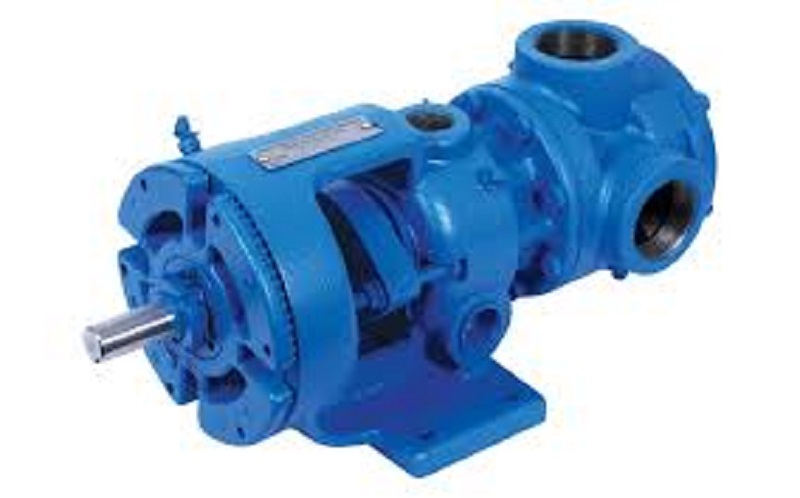
to report «iusnews»; Gear pumps are among the most important types of mechanical pumps used in various industries. Due to their simple structure, high efficiency, and reliability, these pumps play a key role in transferring liquids with different viscosities.
In this comprehensive article, we will introduce the types, working principles, applications, advantages and disadvantages, components and design, and buying guide for gear pumps.
Those interested in purchasing a vacuum pump can visit the relevant page.
What Is a Gear Pump?

A gear pump is a type of positive displacement pump that uses rotating gears to transfer liquids through mechanical pressure. They are produced in two main types—internal and external—each suitable for specific applications.
Thanks to their ability to handle both high and low viscosity liquids, gear pumps are widely used in industries such as oil and gas, chemicals, automotive, and water and wastewater treatment.
Types of Gear Pumps
Internal Gear Pump
In this type, the gears are located inside the pump housing. This design allows the pump to easily handle high-viscosity liquids. Internal gear pumps are widely used in the oil and gas industry to transfer crude oil and refined products.
External Gear Pump
External gear pumps place the gears outside the pump chamber. They are generally more suitable for low-viscosity liquids and are often used in hydraulic systems and automotive applications.
How Gear Pumps Work?
Gear pumps operate on the principle of positive displacement. Two gears rotate inside the pump housing, creating and reducing volumetric space between the gear teeth. This change in volume generates pressure, moving the fluid from the inlet to the outlet.
Main operating steps:
- Inlet Flow – The liquid enters the pump chamber, and the volumetric space between the gears increases.
- Fluid Displacement – As the gears rotate, the volume decreases, creating pressure.
- Outlet Flow – The pressurized fluid exits through the pump outlet.
Applications of Gear Pumps
Gear pumps are used in a wide range of industries and applications:
- Oil and Gas – Transfer of crude oil and refined products.
- Chemical Industry – Pumping high-viscosity chemicals.
- Automotive – Hydraulic systems and oil transfer.
- Water and Wastewater – Fluid transfer in municipal and industrial systems.
- Food and Pharmaceutical Industries – Moving sensitive liquids while meeting hygiene standards.
Advantages and Disadvantages of Gear Pumps
Advantages:
- Simple, Reliable Design – Minimal moving parts for increased durability and lower maintenance costs.
- High Efficiency – Stable performance and precise fluid transfer.
- Handles Various Viscosities – Suitable for both low and high viscosity liquids.
- Compact and Lightweight – Easy to install in limited spaces.
Disadvantages:
- Pressure and Flow Limitations – Best for medium-pressure and medium-flow applications.
- Sensitivity to Solids – Hard particles in the liquid can damage the gears.
- Requires Regular Maintenance – To maintain optimal performance.
Components and Design of Gear Pumps
Main components include:
- Gears – Two gears inside the pump housing responsible for fluid displacement.
- Pump Housing – The casing that contains the gears and moves the liquid.
- Cylinder and Piston – Present in some models to increase pressure and efficiency.
- Lubricants – Reduce friction between gears and extend pump life.
- Inlet and Outlet Chambers – Pathways for the fluid entering and leaving the pump.
Design Considerations:
Gear pumps should be designed to ensure optimal fluid flow with minimal energy loss. High-quality, corrosion- and wear-resistant materials are essential for durability.
Buying Guide for Gear Pumps
Determine Operational Needs:
- Liquid Viscosity – Choose a pump capable of handling the required viscosity.
- Required Pressure and Flow – Identify operating parameters for the right pump capacity.
Choose the Right Materials
- Corrosion and Wear Resistance – Match materials to the fluid type and environmen
- Build Quality – Ensure components meet high-quality standards
Dimensions and Size
- Installation Compatibility – Match the pump size to available installation space
- Weight – Select a suitable weight for easier handling.
Standards and Certifications
- Industrial Compliance – Ensure the pump meets recognized national and international standards.
- Quality Certificates – Look for certification to guarantee performance and safety.
Cost Considerations
- Purchase Price – Compare prices from reputable suppliers.
- Maintenance Costs – Account for post-purchase servicing and repairs.
After-Sales Service:
- Spare Parts Availability – Ensure spare parts are readily accessible.
- Technical Support – Access to expert assistance from the manufacturer or supplier.
Conclusion
With their unique features, gear pumps are an ideal choice for many industrial applications. Choosing the right pump and maintaining it properly can significantly improve efficiency and reduce operational costs.
With advancing technology, gear pumps are expected to continue improving and playing a vital role across industries.
FAQ
What is a gear pump?
A gear pump is a positive displacement pump that uses rotating gears to move liquids through mechanical pressure.
What are the benefits of using a gear pump?
Key advantages include simple design, high efficiency, ability to handle various viscosities, and compact size.
In which industries are gear pumps used?
They are used in oil and gas, chemicals, automotive, water and wastewater, and food and pharmaceutical industries.
How can you extend the life of a gear pump?
By performing regular maintenance, periodic inspections, replacing lubricants, and preventing hard particles from entering the pump.
What factors affect the selection of a suitable gear pump?
Liquid viscosity, required pressure and flow, construction materials, size and dimensions, and industry standards are key considerations.
.if you want to know vacuum pump price cilck the link
