

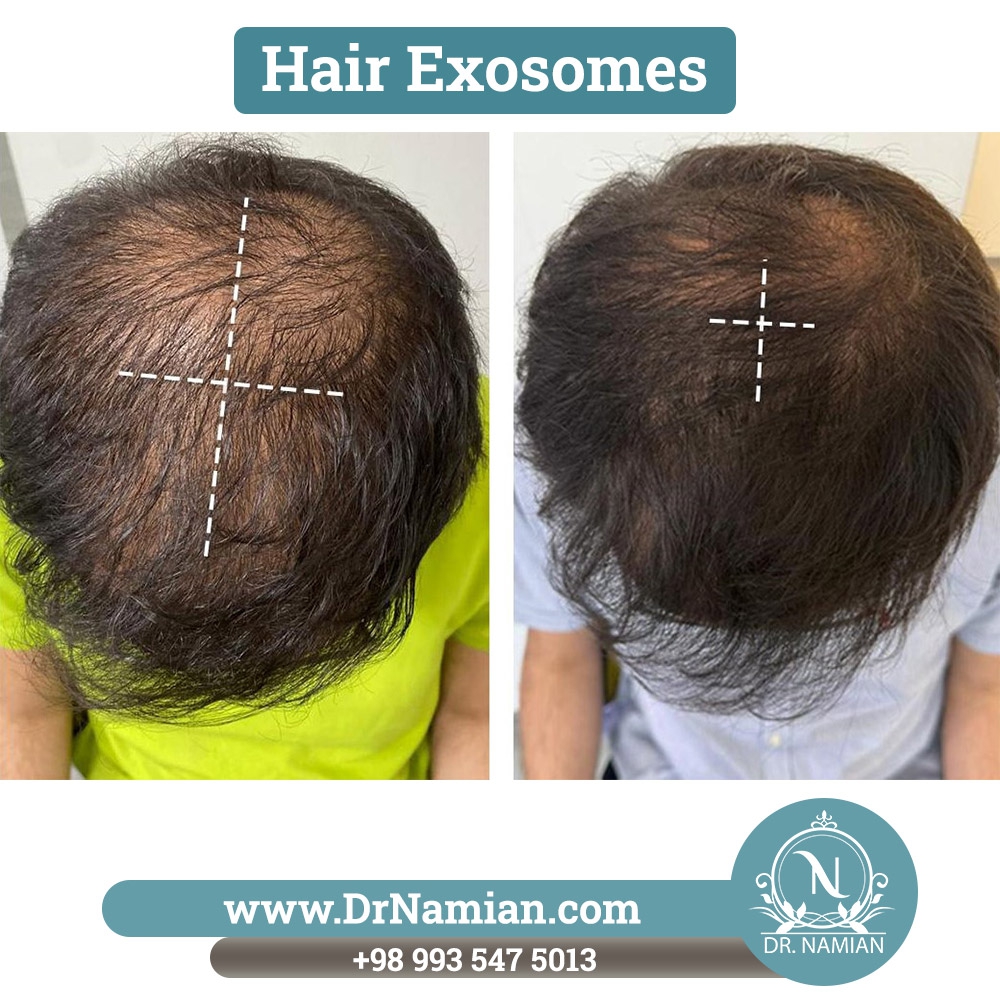
Stem cell–derived exosomes are rapidly becoming one of the most talked-about tools in regenerative dermatology, especially for people struggling with stubborn Hair Loss and progressive hair thinning. Instead of simply slowing the process or masking the problem, this approach aims to influence the biology of the hair follicle itself. At the center of this strategy is the concept of the hair exosome—tiny, biologically active vesicles that can deliver powerful signals to damaged or miniaturized follicles and potentially restart growth.
In this article, we’ll unpack what hair exosomes are, how they work, what current clinical data show, and where this treatment might fit in the modern Hair regrowth landscape.
What are hair exosomes and how do they work?
To understand why the term hair exosome is appearing in so many clinical discussions, it helps to look at the biology behind it. Exosomes are small, lipid-bound extracellular vesicles released by many cell types in the body. They carry proteins, growth factors, cytokines, and microRNAs that act as messengers between cells and help coordinate tissue repair and regeneration.
When these vesicles come from stem cells-particularly mesenchymal stromal cells (MSCs)-their cargo becomes especially interesting for Hair Loss medicine. Instead of transplanting live cells, clinicians can use stem cell–derived exosomes as a concentrated “signal package.” In the context of hair exosome therapy, those signals are directed toward hair follicles that are shrinking, inflamed, or stuck in prolonged resting phases.
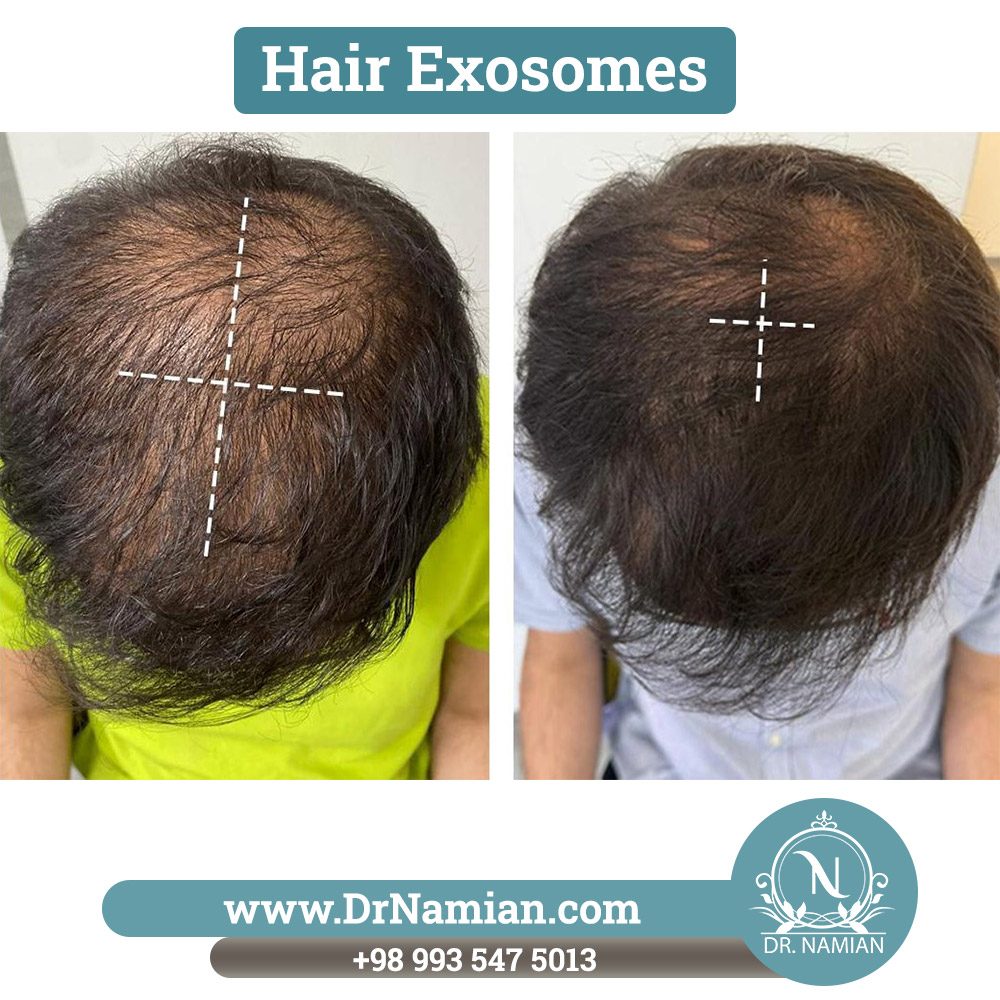
Researchers describe exosomes as delivery systems that bring “blueprints and tools” to the scalp. The microRNAs act like instructions, while growth factors and cytokines serve as specialized instruments that support follicle repair. Together, this mix can help move follicles back toward an active growth state and support sustained Hair regrowth.
Androgenetic alopecia: why follicles need new signals
Most people seeking hair exosome therapy live with some form of androgenetic alopecia (AGA), the most common cause of Hair Loss in men and a major contributor in women. AGA is characterized by patterned hair thinning, often in the frontal and vertex regions in males, and diffuse volume loss in females. Over time, genetically susceptible follicles miniaturize: hairs become thinner, shorter, and eventually may stop emerging at all.
The primary goal of any effective AGA treatment is to stop or slow this miniaturization and improve hair density. Traditional options like oral or topical medications can help in many cases, but they do not work for everyone, and some patients prefer regenerative approaches over long-term drug use. In this context, a targeted hair exosome approach offers an appealing alternative: instead of only blocking hormones or increasing blood flow, exosomes aim to change the microenvironment around the follicle itself.
For patients exploring hair exosome therapy in Shiraz by Dr. Samar Namian, this regenerative logic is often the main attraction: harnessing stem-cell signals rather than relying only on conventional pharmaceuticals.
Mechanisms behind hair exosome–driven Hair regrowth
The promise of hair exosome therapy lies in how these vesicles interact with follicle cells once they are injected into the scalp. Laboratory and early clinical data suggest several key mechanisms:
-
Modulating signaling pathways: Hair exosomes carry growth factors and cytokines that can influence pathways crucial for follicle development and cycling, such as those involving beta-catenin and sonic hedgehog.
-
Stimulating proliferation and differentiation: By binding to receptors on target cells, exosomes can trigger cascades that encourage follicle cells to divide and mature, helping reverse aspects of hair thinning.
-
Shifting the hair cycle: Studies indicate that exosome treatment can accelerate the transition from telogen (resting) to anagen (active growth), a central step in meaningful Hair regrowth.
-
Protecting follicles: Exosomes may help defend follicle cells from oxidative stress, which is one contributor to progressive Hair Loss over time.
All of these effects support the idea that a carefully delivered hair exosome preparation can act as a focused repair signal for weakened follicles rather than a generic stimulant.
Clinical evidence: what one prospective study tells us
While the biological theory is compelling, patients and clinicians need real-world data to judge whether hair exosome therapy can deliver measurable benefits. A prospective study of 30 male patients with androgenetic alopecia—aged 22 to 65, classified as type III–VI on the Norwood–Hamilton scale—provides some early but important evidence.
In this study, investigators used exosomes derived from foreskin-derived mesenchymal stromal cells. The vesicles were characterized by nanoparticle tracking analysis, which confirmed their typical size range (about 30–200 nm) and surface markers, including CD9, CD63, and CD81. A single treatment session involved injecting a total of 3 mL of the exosome preparation into the scalp using the napage technique: 2 mL into the frontal area and 1 mL into the vertex.
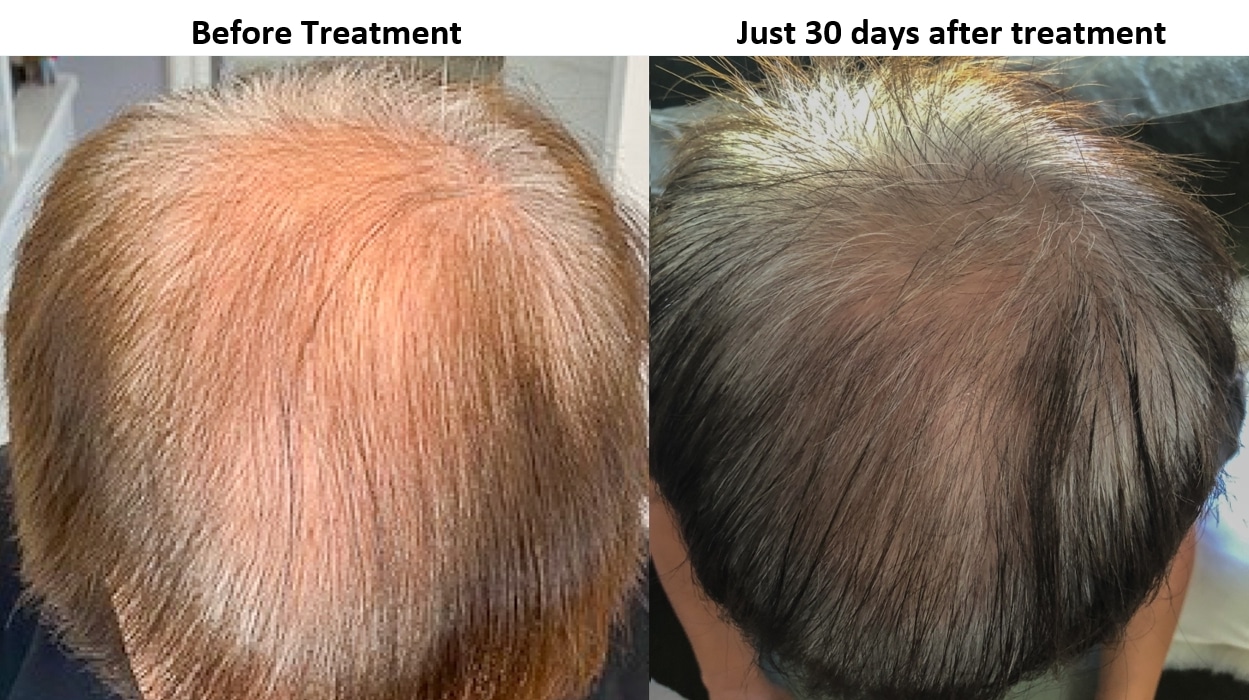
Results showed a statistically significant increase in mean hair density at both 4 and 12 weeks after injection compared to baseline, with p-values of 0.043 and 0.002 respectively. Patients themselves reported less Hair Loss and visually improved Hair regrowth over the same period, and satisfaction scores were significantly better at week 12 than at week 4.
From a practical standpoint, this means that a single hair exosome treatment, at least in this group, produced early improvements that continued to build for at least three months. The effect size was described as comparable to what has been observed with other regenerative approaches like platelet-rich plasma (PRP) and stromal vascular fraction (SVF) in AGA.
Comparing hair exosome therapy with other regenerative options
For patients deciding between options, it helps to understand how hair exosome therapy fits alongside PRP and SVF. All three aim to use the body’s own biology to address Hair Loss, but they differ in what they deliver and how they are prepared.
PRP concentrates platelets from the patient’s own blood and injects them back into the scalp, releasing growth factors locally. SVF, derived from adipose tissue, delivers a complex mix of cells and supporting factors. A hair exosome preparation, by contrast, isolates only the extracellular vesicles-without live cells-often from a standardized stem-cell source.
According to the study described earlier, the improvement in hair density with exosomes is broadly similar to what published data report for PRP and SVF in androgenetic alopecia. This suggests that hair exosome therapy may belong in the same category of regenerative tools, offering another option for patients who want biologically focused strategies for hair thinning and Hair regrowth.
Safety profile: encouraging but not the final word
Safety is a critical question whenever a new regenerative technology moves toward wider use. In the prospective study of 30 men, no immediate or delayed complications were observed following injection of the exosome preparation. Patients tolerated the procedure well, and no serious local or systemic side effects were reported during follow-up.
Broader reviews of MSC-derived exosomes in dermatology also support a generally favorable safety profile, with few issues such as immune reactions or anaphylaxis reported. At the same time, at least 10 serious adverse events have been documented across various dermatologic applications of exosomes, emphasizing that this is still an evolving field and not a risk-free technology.
For anyone considering a hair exosome procedure, this means two things: first, early data for Hair Loss are reassuring; second, it remains essential to work with clinicians who follow evidence-based protocols, quality controls, and proper patient selection criteria.
Open questions: study limitations and research gaps
Although the early clinical signal for hair exosome therapy looks promising, current research has important limitations. The 30-patient prospective study did not include a control group, such as a saline injection or sham procedure, which makes it harder to separate the pure biological effect from placebo or other variables. The study also evaluated only a single injection session and did not explore the impact of repeated treatments over longer periods.
In addition, many aspects of manufacturing and standardization remain under development. Different sources of stem cells, isolation techniques, and dosing strategies may produce hair exosome products with different potencies. Regulatory frameworks are still catching up with this diversity, and clinicians must navigate variable quality in commercially available preparations.
Who might be a candidate for hair exosome therapy?
Based on current evidence, the most clearly studied group includes men with androgenetic alopecia showing mild to moderate hair thinning in Norwood–Hamilton stages III–VI. However, the underlying mechanisms—improving follicle signaling, encouraging anagen entry, and supporting Hair regrowth—may be relevant to a broader range of patients, including some women with patterned Hair Loss:
-
Want a regenerative, minimally invasive option rather than surgery
-
Have realistic expectations about gradual improvement rather than instant transformation
-
Are medically suitable for scalp injections and can attend follow-up evaluations
Where does hair exosomes fit in the future of Hair Loss treatment?
Stem cell exosomes sit at the intersection of cell therapy, molecular medicine, and cosmetic dermatology. For Hair Loss, they represent a focused attempt to deliver pro-regenerative signals directly to struggling follicles. Current data suggest that hair exosome therapy can increase hair density, reduce visible hair thinning, and support early Hair regrowth with a safety profile that, so far, appears acceptable in carefully selected patients.
At the same time, larger randomized trials, longer follow-up, and clearer regulatory standards are needed before this treatment can be considered a mature, fully validated option. Until then, a thoughtful approach makes sense: view the hair exosome as a promising tool within a wider toolkit, not as a guaranteed solution on its own.
For patients and clinicians who are willing to engage with cutting-edge regenerative science, hair exosome therapy offers a structured, biologically plausible way to push beyond traditional methods and explore new frontiers in preserving and restoring hair.
