

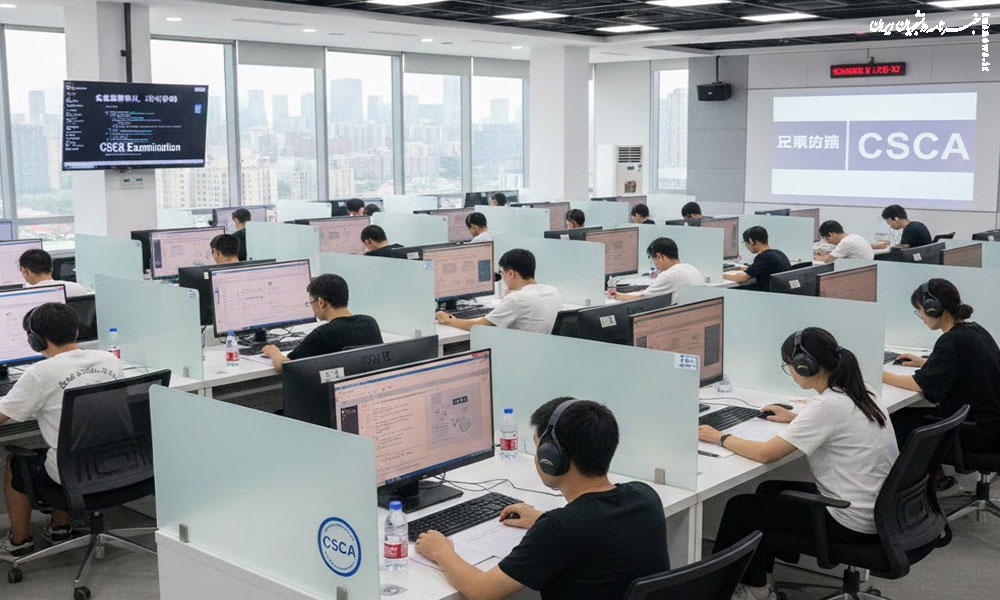
One of the most important requirements for studying in China for international applicants is taking the CSCA (China Scholastic Competency Assessment) exam. This test, considered an academic readiness assessment, evaluates applicants’ foundational knowledge, essential skills, and language proficiency for pursuing higher education in Chinese universities.
The suitability of studying in China has attracted considerable attention from international students, with thousands applying to Chinese universities each year. Top Chinese institutions, such as Peking University, Wuhan University, and Shanghai Jiao Tong University, enjoy high global recognition, with many ranked among the top 500 universities worldwide.
Another advantage of studying in Chinese universities is the high quality of education. Chinese higher education adheres to global standards and competes with leading universities worldwide. Moreover, tuition fees in China are relatively affordable compared to many Western universities, providing an excellent opportunity for academically motivated students with moderate financial means. Various programs, including medicine, dentistry, engineering, and more, are offered under the guidance of reputable professors and follow standardized academic curricula.
Studying in China: A Path Toward a Bright Future
China is one of the most populous countries globally, and education is a key national priority. Beyond primary and secondary education, higher education holds significant importance, with numerous internationally recognized universities operating in the country. In recent years, academic migration to China has increased, largely due to the global reputation of its universities and the high quality of education. Fundamental reforms in teaching, academic quality, student welfare, and participation in international research projects are among the key factors that make a university eligible to accept international students.
China’s higher education system has made substantial investments to implement these reforms, creating a conducive environment for foreign students. Advantages of studying in China include access to a robust job market, ease of entering international and Asian labor markets, and opportunities to participate in research projects that strengthen academic and professional resumes. Additionally, Chinese scholarships cover part or all of tuition fees, providing further financial support. A new requirement for foreign student admissions in 2026 is the CSCA exam, recognized as a standardized entry test for Chinese university programs.
What is the CSCA Exam?
Applicants planning to study in China in 2026 must stay updated on the latest admission requirements, as there have been changes to the application process. International students will need to take a new standardized test called the CSCA, short for China Scholastic Competency Assessment. Chinese universities emphasize the importance of preparing for the CSCA, especially for undergraduate programs, as it evaluates applicants’ foundational skills and language proficiency.
This exam is particularly important for admission to public universities and institutions offering scholarships. Since it is a new requirement for the 2026 intake, a final scoring system has not yet been established. Chinese universities and local authorities are expected to make a final decision by the end of October 2025.
For detailed information about the exam, applicants can consult university websites or reputable immigration agencies. Admission Institute is a successful organization that provides not only guidance on academic migration but also detailed information on entrance exams for universities worldwide.

Top Chinese Universities and Tuition Fees
Many Chinese universities rank among the top institutions globally and attract international students due to their high educational standards. Moreover, studying in China is often more cost-effective than in Western countries like the United States or Canada, which further motivates foreign students to pursue higher education in China.
Participation in the CSCA exam is one of the new prerequisites for studying in China, including programs such as medicine. Applicants should obtain precise information from university websites or accredited migration offices. International students attending top Chinese universities like Peking University, Fudan University, Wuhan University, Shanghai Jiao Tong University, and Tsinghua University can look forward to promising academic and career prospects. Tuition fees in China vary depending on the university, program, degree level, and language of instruction. The average annual tuition at some universities is as follows:
- Peking University: Bachelor’s: 45,000 CNY; Master’s: 54,000 CNY; Doctorate: 62,000 CNY
- Xiamen University: Bachelor’s: 26,000 CNY; Master’s: 45,000 CNY; Doctorate: 55,000 CNY
- Tsinghua University: Master’s: 33,000 CNY; Doctorate: 40,000 CNY
By consulting the Admission Institute, applicants can access complete information regarding studying in China, tuition costs, visa applications, and other essential details.
Requirements for Studying in China
In addition to providing various documents, taking the CSCA exam is the newest requirement for studying in China. Other prerequisites include:
- Submission of officially translated academic certificates
- Submission of officially translated personal identification documents
- A valid passport
- Proof of Chinese or English language proficiency
- Obtaining a Chinese student visa
- Providing proof of financial stability
Applicants should download and carefully review the university’s admission form, complete it, and upload it along with scanned documents as requested. Academic achievements, such as GPA and research experience, play an essential role in improving admission chances and securing scholarships. Reputable migration agencies like Admission Institute can assist applicants in navigating this process, providing guidance on universities, tuition, scholarships, and the CSCA exam.

Additional Information on the CSCA Exam
As mentioned, final decisions regarding the CSCA exam are still pending. However, the test is expected to focus on applicants’ foundational knowledge, including language and core subjects relevant to each field of study. For instance, students applying to medicine or experimental sciences will need to answer questions in mathematics, biology, chemistry, and physics.
Language skills, particularly reading comprehension, will also be assessed. Since the exam is designed for international applicants, in-depth familiarity with Chinese language and culture is not required, allowing students to prepare without concern.
Admission Institute: A Trusted Choice for Academic Migration to China
The CSCA is a new standardized exam designed for undergraduate applicants in 2026. It evaluates international students’ basic skills necessary for success at top Chinese universities. Information regarding the exam is still under review, with a final decision expected by the end of October 2025.
For further details on the exam, tuition fees, universities, scholarships, and more, prospective students can consult the experienced advisors at Admission Institute. With a strong track record in academic migration, Admission Institute provides a secure pathway for students seeking to study in China.
