

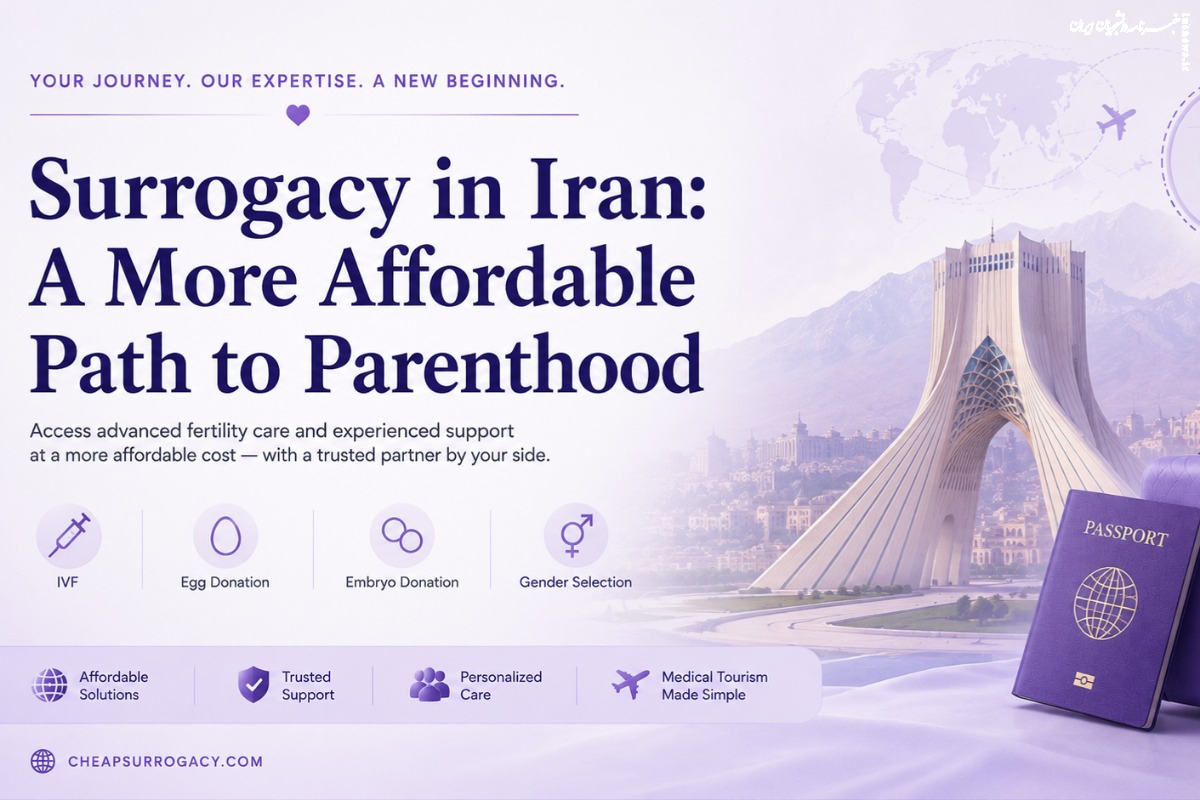
to report «iusnews»; For couples and individuals building a family through surrogacy, the first shock usually isn't medical — it's financial. A single surrogacy journey in the United States can run past $150,000 once legal fees, agency coordination, and clinical costs are added up. For many intended parents outside the US and Western Europe, that price tag alone rules out the option entirely.
That gap has pushed a growing number of international intended parents (IPs) to look further afield, and one name that keeps coming up is VitaLife, a fertility and surrogacy provider based in Iran.

The Cost Conversation Nobody Skips
Ask anyone who has researched surrogacy abroad what stopped them, and cost is almost always near the top of the list. Established US-based agencies remain the benchmark for legal infrastructure and coordination, but that infrastructure comes at a price — often well above what many families can realistically plan for.
This is where the conversation naturally shifts toward what a genuinely international surrogacy agency outside the traditional US/UK axis can offer. VitaLife has built its program around exactly this gap, positioning itself as a structured, medically supervised alternative for families who want modern IVF protocols and professional case management without the six-figure price tag that dominates the US market.
What Makes Surrogacy in Iran Different
A few features tend to stand out when intended parents compare surrogacy in Iran against the more familiar Western programs:
- Lower overall program costs. Because clinical and operational costs in Iran are considerably lower than in the US, total program costs are typically a fraction of premium Western pricing — a difference significant enough to make the process realistic for families who would otherwise have to shelve the idea altogether.
- Simplified travel for many nationalities. Visa logistics can add months to any cross-border medical journey. Citizens of a number of countries, including China, Turkey, Armenia, Azerbaijan, Georgia, Malaysia, Oman, Egypt, Lebanon, Syria, Bolivia, and Venezuela, can currently enter Iran without a visa, which removes one of the more frustrating bottlenecks in international fertility care. (Visa rules can change, so it's worth confirming current requirements for your specific nationality before booking travel.)
- A structured, single-provider model. Rather than juggling separate clinics, matching services, and legal contacts, VitaLife coordinates surrogate matching, IVF protocols, and medical supervision within one system — closer in spirit to the "integrated" models that premium US agencies are known for, just built around a different cost structure.
None of this means Iran is a like-for-like substitute for agencies such as Hatch Fertility, Circle Surrogacy, ConceiveAbilities, or Same Love Surrogacy — those providers have decades of US legal precedent behind them, which matters for some families more than cost does. But for intended parents whose main barrier is budget, or who face long waitlists elsewhere, Iran has become a serious option to research rather than a niche curiosity.

Matching Cost With What You Actually Need
Every surrogacy journey involves trade-offs between price, legal certainty, timeline, and the specific services required. Some families need a straightforward gestational journey; others are looking for the best surrogacy programs for international intended parents, meaning programs that combine predictable costs, manageable travel logistics, and enough flexibility to restart a cycle if a first attempt doesn't succeed. Reviewing how a program structures failed-cycle policies, embryo transfer limits, and included services is generally more useful than comparing headline prices alone, since two programs quoted at similar costs can differ substantially in what's actually covered.
Beyond Surrogacy: A Broader Fertility Toolkit
Cost isn't the only reason IPs are looking at Iran. VitaLife's program sits inside a wider fertility ecosystem that includes IVF, egg and embryo donation, and gender selection — services some families are actively seeking but that aren't legally available, or are heavily restricted, in their home countries. Having these options available under one coordinated program, rather than needing to source them from separate providers in separate countries, is part of what's driving interest from IPs researching options beyond the traditional US and European destinations.

The Bottom Line
There's no single "best" surrogacy agency in 2026 — only the one that matches your budget, your timeline, your legal comfort level, and the specific services you need. For intended parents who've priced out the premium US market and are looking for a medically supervised, lower-cost alternative with a broader service range, Iran — and providers like VitaLife — is now a legitimate part of that conversation.
