

to report «iusnews»; The forex market processes trillions of dollars in trading volume every day, making it one of the largest and most liquid financial markets in the world. Yet despite the abundance of brokers available online, choosing the right one remains one of the most important decisions a trader can make. A broker is more than a platform for placing orders—it affects trading costs, execution quality, fund security, and the overall trading experience.
For new traders, the number of available options can be overwhelming. Low spreads, high leverage, bonus offers, and marketing campaigns often attract attention, but they do not necessarily indicate a broker's overall quality. Evaluating a broker requires looking beyond promotional claims and focusing on measurable factors.
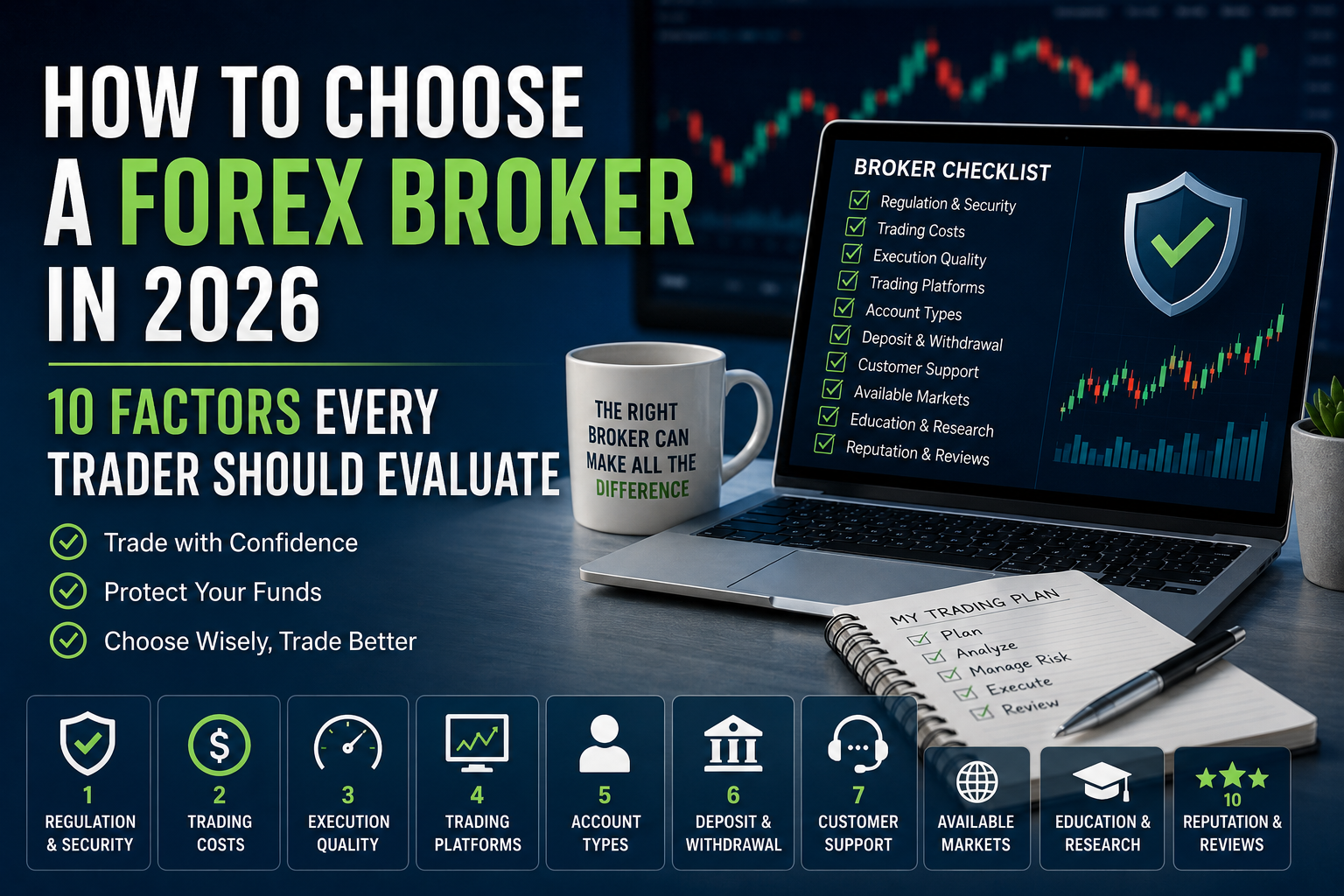
This guide outlines ten practical criteria that can help traders compare forex brokers more objectively before opening an account.
1. Regulatory Oversight Should Be the Starting Point
Regulation is often the first factor experienced traders examine.
A regulated broker operates under the supervision of a financial authority and is typically required to meet standards related to client fund protection, reporting, and operational transparency. While regulation cannot eliminate all risk, it generally provides a stronger framework than trading with an unregulated company.
Different regulators impose different requirements, so traders should verify a broker's licensing information directly rather than relying solely on marketing material.
2. Understand the Broker's Trading Costs
Trading costs extend well beyond the advertised spread.
When comparing brokers, consider:
- Average spreads rather than minimum spreads
- Commission charges
- Overnight swap fees
- Deposit and withdrawal costs
- Currency conversion fees, if applicable
For active traders, even small differences in trading costs may become significant over hundreds of trades.
A broker offering a slightly wider spread but consistent execution may ultimately provide better value than one advertising unrealistically low pricing.
3. Evaluate Order Execution
Execution quality is frequently overlooked, especially by beginners.
Fast execution helps reduce the likelihood of significant price differences between the requested price and the executed price during volatile market conditions.
While no broker can guarantee perfect execution under every circumstance, traders should look for transparency regarding execution policies and whether the broker publishes information about its execution model.

4. Review the Available Trading Platforms
The trading platform is where every trading decision is executed.
Most brokers support platforms such as MetaTrader 4 (MT4), MetaTrader 5 (MT5), or proprietary web-based platforms.
Before opening a live account, traders should evaluate whether the platform offers:
- Stable performance
- Mobile accessibility
- Advanced charting tools
- Multiple order types
- Custom indicators or automated trading support
- Economic calendar integration
A demo account can provide valuable insight into platform usability before committing real funds.
5. Check the Range of Tradable Markets
Some traders focus exclusively on forex, while others diversify into additional asset classes.
Depending on the broker, available instruments may include:
- Major and minor currency pairs
- Precious metals
- Energy products
- Global stock indices
- Individual equities
- Exchange-traded funds (ETFs)
- Cryptocurrencies
- Commodities
Having access to multiple markets may become increasingly valuable as a trader's strategy evolves.
6. Examine Deposit and Withdrawal Options
Funding an account should be straightforward, but withdrawing funds is equally important.
Before selecting a broker, traders should review:
- Supported payment methods
- Typical processing times
- Minimum withdrawal amounts
- Applicable fees
- Verification requirements
Transparent payment policies often indicate a broker that values operational clarity.
7. Customer Support Matters More Than Many Expect
Technical issues, verification questions, or platform interruptions can occur at any time.
Reliable customer support can make a meaningful difference when assistance is required.
Useful aspects to evaluate include:
- Availability during trading hours
- Response time
- Communication channels (live chat, email, telephone)
- Availability of multilingual support
- Quality of educational resources
Testing customer support before depositing funds is a practical step that many traders overlook.
8. Educational Resources Can Add Long-Term Value
A growing number of brokers now provide educational content alongside trading services.
Examples include:
- Market analysis
- Trading guides
- Webinars
- Economic calendars
- Risk management articles
- Video tutorials
Although educational material should not replace independent research, it can help traders improve their understanding of financial markets over time.
9. Compare Brokers Objectively
No broker is ideal for every trader.
For example:
- A scalper may prioritize tight spreads and execution speed.
- A swing trader may focus more on overnight financing costs.
- A beginner may place greater importance on educational resources and customer support.
Because trading styles differ, broker comparisons should focus on measurable criteria rather than promotional rankings.
Independent review platforms can help traders compare broker features in a structured and transparent manner.
For instance, traders interested in learning more about HYCM can review its trading conditions, available platforms, account types, and regulatory information through BrokerDecider's dedicated review page before making any decision.
Likewise, those comparing newer market participants may also find it useful to review the detailed analysis of Errante, including its product offering, trading environment, and account features alongside other brokers operating in the industry.
Examining multiple independent reviews allows traders to compare strengths and limitations instead of relying on a single source of information.
10. Match the Broker to Your Trading Strategy
The best broker for one trader may not be the best choice for another.
Consider the following examples:
| Trading Style | Factors That May Matter Most |
|---|---|
| Scalping | Low spreads, fast execution, minimal slippage |
| Day Trading | Stable platforms, competitive commissions, liquidity |
| Swing Trading | Reasonable overnight costs, market availability |
| Position Trading | Broad market access, research tools, account stability |
Selecting a broker that aligns with personal trading objectives is generally more effective than choosing solely based on marketing claims.
Common Mistakes When Choosing a Forex Broker
Many traders make similar mistakes during the selection process.
Some of the most common include:
- Choosing a broker solely because it offers high leverage.
- Ignoring regulation and fund security.
- Comparing only minimum spreads.
- Overlooking withdrawal policies.
- Opening a live account without testing the platform.
- Relying exclusively on online advertisements or influencer recommendations.
Avoiding these mistakes can reduce unnecessary risks before trading even begins.
Final Thoughts
Choosing a forex broker is not simply about finding the lowest spread or the highest leverage. A well-informed decision should consider regulation, execution quality, trading costs, platform reliability, available markets, payment policies, and customer support.
Taking time to compare brokers objectively can help traders identify a service that matches their individual goals and trading style.
Independent comparison websites that publish detailed broker reviews can be useful resources during this process, particularly when evaluating different providers side by side. Ultimately, the most suitable broker is one that meets a trader's specific requirements while maintaining transparency, consistency, and reliable trading conditions over the long term.
Source: BrokerDecider
