


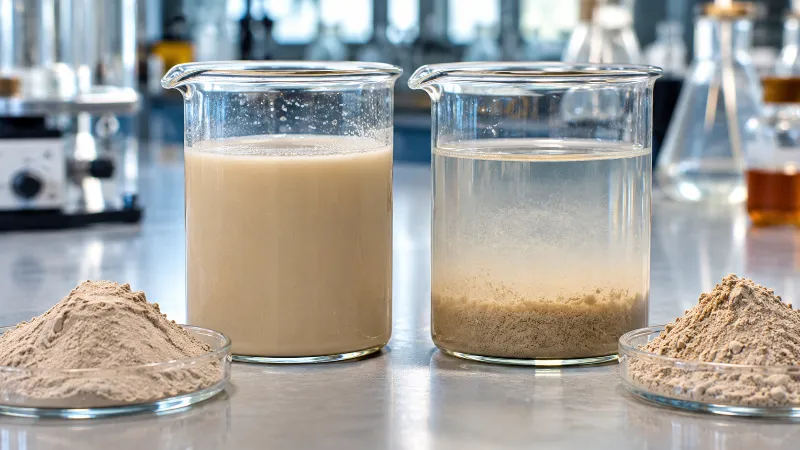
to report «iusnews»; Two bentonite samples can look almost identical but behave differently when exposed to water or used in industrial processes. One may develop a stable, thick suspension, while another settles more quickly or requires additional treatment. The reason often lies in the geological conditions under which the clay originally formed.
Bentonite is widely used in drilling, metal casting, construction, iron ore pelletizing and absorbent products. Yet the term “bentonite” does not describe a material with identical properties across every deposit. Its mineral composition and geological history can significantly influence how it performs.
How Geological Conditions Shape Bentonite
Many bentonite deposits originate from volcanic ash that gradually transforms into clay minerals through interactions with water. This process can occur in different geological environments, including marine and lake-related settings.
Montmorillonite, a mineral belonging to the smectite group, is largely responsible for bentonite's swelling and water-absorption properties. Its layered structure allows water and certain ions to interact with the mineral, influencing the behavior of the clay.
However, not every volcanic deposit undergoes the same transformation.
The chemistry of groundwater, composition of the original volcanic material and subsequent geological processes can produce differences in mineral content. Consequently, two deposits may contain similar-looking clay but different proportions of montmorillonite, quartz, feldspar or other minerals.
These differences matter because industrial performance depends on more than appearance or geographical origin.
Why Sodium and Calcium Bentonite Behave Differently
One of the most commercially significant distinctions is the type of exchangeable ions associated with the clay minerals.
Sodium bentonite generally exhibits greater swelling and dispersion in water than calcium-dominant bentonite under comparable conditions. This makes suitable sodium-rich grades valuable in applications requiring suspension development and low permeability.
Calcium bentonite typically swells less but can provide useful adsorption and binding characteristics for specific industrial purposes.
Neither type is automatically superior.
Natural bentonite deposits may contain mixtures of sodium, calcium and magnesium ions, and their behavior also depends on mineral structure, processing and water chemistry.
For this reason, labeling a product as sodium or calcium bentonite provides only part of the information required to assess its suitability.
Mineral Composition and Industrial Performance
The proportion and characteristics of smectite minerals help determine how bentonite reacts during industrial use.
A deposit with suitable swelling smectite may perform well in water-based drilling fluids, while another material may be more appropriate for foundry molding sand.
Non-clay minerals can also influence product behavior. The presence of quartz, carbonates or other mineral phases may affect the concentration of active clay and the way a material responds during processing.
Research on bentonite deposits has demonstrated that mineral composition, exchangeable cations and associated minerals can influence performance even where materials share the same commercial classification.
These differences become particularly important when bentonite is used in processes with specific technical requirements.
Drilling Fluids
In drilling operations, bentonite helps develop viscosity, suspend drilled particles and control fluid loss.
A suitable sodium-rich bentonite may develop a stable suspension more readily than a calcium-dominant material. However, water hardness, salinity and mixing conditions can change the result.
A sample that performs well in freshwater may respond differently when mixed with saline or mineral-rich water.
Foundry and Metal Casting
Foundries use bentonite as a binder in molding sand.
The material must contribute to appropriate mold strength while maintaining suitable compactability and permeability. Certain calcium-dominant bentonites may be useful for particular binding applications, while sodium activation can modify the behavior of some materials.
High swelling capacity alone does not guarantee good foundry performance.
Construction and Sealing
Selected bentonite grades are used in sealing systems and civil engineering applications because their swelling behavior can help reduce permeability.
The mineral's original composition influences this capability, but groundwater chemistry also matters. Dissolved salts and exchangeable ions can affect swelling and barrier performance.
Material selection should therefore consider the actual environmental conditions in which the bentonite will operate.
Iron Ore Pelletizing
Bentonite helps bind fine iron ore particles into pellets before further processing.
In this application, binding performance is more important than achieving the highest possible swelling value. Mineral composition, moisture requirements and compatibility with the ore mixture can affect pellet quality.
A grade suitable for drilling fluids is not necessarily the best choice for pelletizing.
Can Processing Improve Natural Bentonite?
Although geological origin establishes the material's initial characteristics, processing can modify its commercial properties.
Common operations include drying, grinding, screening and particle-size classification. Some producers also blend material from different deposits to improve consistency.
Sodium activation, commonly involving sodium carbonate, can modify certain calcium-rich bentonites and improve their performance in selected applications.
However, treatment results depend on the starting mineral composition. Two deposits subjected to similar processing conditions may not respond in the same way.
This is why neither the mining location nor the processing method should be considered sufficient evidence of industrial quality.
Why Bentonite Quality Can Vary Within the Same Deposit
Differences are not limited to separate mining regions. Mineral composition can also change between layers or extraction zones within a single deposit.
As mining progresses, the proportion of clay minerals and associated materials may vary. If these changes are not identified, industrial users may experience inconsistencies in suspension behavior, binding performance or processing requirements.
Research published in Clays and Clay Minerals has highlighted the importance of mineralogical analysis and quality control when evaluating bentonite from different mining locations.
For buyers who depend on continuous material supply, representative sampling and consistent testing are therefore essential.
What Industrial Buyers Should Evaluate
Understanding geological origin can help explain material differences, but laboratory results remain essential when selecting bentonite for a particular application.
Important evaluation factors include:
-
Mineral composition: The type and proportion of smectite and associated minerals.
-
Exchangeable cations: The relative presence of sodium, calcium and other ions.
-
Swelling behavior: The material's response to water under defined conditions.
-
Particle size and moisture: Properties that influence handling and processing.
-
Application-specific performance: Viscosity for drilling fluids, binding properties for foundries or other relevant tests.
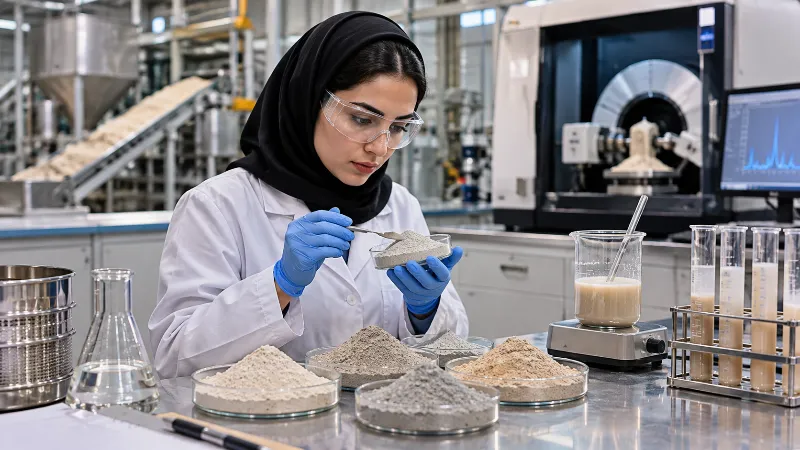
Techniques such as X-ray diffraction can identify mineral phases, while measurements of cation exchange capacity provide additional information about clay characteristics.
However, these tests should complement rather than replace practical performance assessments.
Buyers should also consider whether tested samples represent the material that will actually be delivered.
Understanding bentonite's mineral composition is only one part of selecting the right material. For larger orders, buyers also need to consider sampling consistency, packaging, inspection requirements and delivery terms. These practical considerations are discussed in more detail in this guide to ordering bentonite in bulk.
Understanding the Material Behind the Name
Bentonite's industrial value comes from its mineral structure and its ability to interact with water and other materials. Yet these characteristics are shaped by geological processes that differ between deposits.
The original volcanic material, alteration environment, exchangeable cations and associated minerals all contribute to the properties of natural bentonite. Processing may improve or modify those properties, but it does not eliminate every difference between mineral sources.
For industrial users, knowing where bentonite comes from is useful because it helps explain variations in performance. Still, geological origin should be treated as supporting information rather than a substitute for technical evaluation.
Ultimately, the best material is not necessarily the one with the highest swelling capacity or the most familiar source. It is the bentonite whose measured properties match the requirements of the intended application.
References
-
U.S. Geological Survey (USGS). Bentonite and Fuller's Earth Resources of the United States. Professional Paper 1522.
-
U.S. Geological Survey (USGS). Overview with Methods and Procedures of the U.S. Geological Survey Mineral-Resource Assessment, Bentonite appendix. Scientific Investigations Report 2016–5089–A.
-
Kaufhold, S., et al. (2025). Enhanced Quality Control and Smectite Quantification for Bentonites in the Bavarian Mining District Based on Layer Charge Measurement with the O-D Method. Clays and Clay Minerals.
-
Physical and Chemical Properties of Some Bentonite Deposits of Kimolos Island, Greece (1998). Applied Clay Science.
