

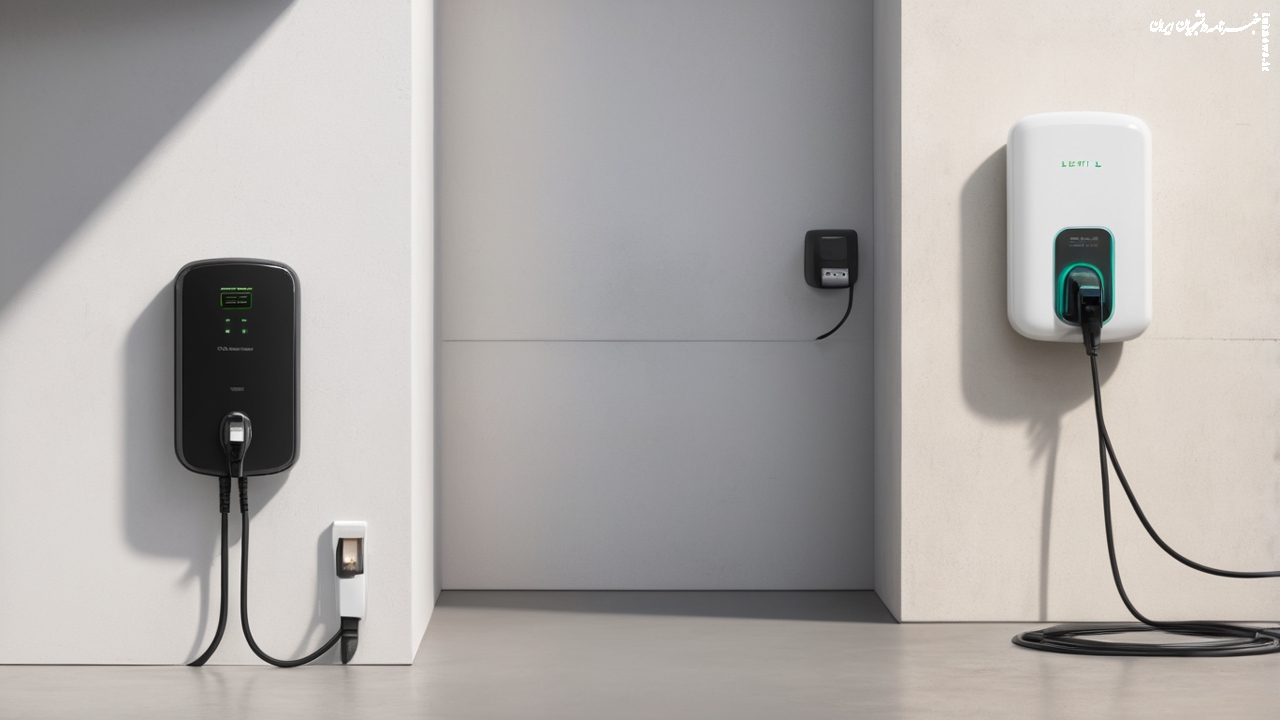
The decision regarding Level 1 vs Level 2 EV Chargers: Which One Fits Your Home Best? is a primary determinant of the ease and convenience experienced when owning an Electric Vehicle (EV). With the rapid increase in the number of EVs on the road, the question of how to power these vehicles at home has become one of the most significant concerns for new owners. Home charging is the greatest advantage of EV ownership over gasoline vehicles, (EV charger installation) as instead of spending time at the fuel pump, you connect the car to electricity every night, preparing it for the next day's drive. However, there is a substantial difference between utilizing a standard wall outlet and installing a dedicated charging station.
Generally, there are three main charging levels for EVs. Level 3 or DC fast charging is exclusively used at public or commercial stations and is not designed for residential use. (EV charger installation) Our focus in this guide is on the two options available for any home: Level 1 charging, which uses standard outlets, and Level 2 charging, which requires specialized installation and more robust infrastructure. Although Level 1 appears to be the simpler option, its slow speed can be challenging for daily drivers.
The goal of this article is to provide a comprehensive and technical comparison between these two charging levels. We will meticulously examine voltage specifications, power output, charging speed in miles/kilometers per hour, installation costs, and home infrastructure considerations to help you decide which charger best suits your lifestyle, driving habits, vehicle type, and home electrical capacity.
Technical Analysis of Level 1 Charging: Simplicity Without Installation Needs
Level 1 charging is the most basic and simplest form of energy supply for an EV at home. This method is considered the "starting point" for every EV owner because it almost never requires changes or upgrades to the home's electrical infrastructure.
Technical Specifications and Level 1 Performance
Level 1 charging is accomplished using a portable charging cable (often provided with the vehicle) connected to a standard 120-volt (V) electrical outlet in North America (or 230V in many parts of Europe).(EV charger installation) The low voltage of these outlets translates to very limited power output, which typically ranges between 1.4 and 2.4 kilowatts (kW). This low power significantly restricts the charging speed.
Describing the charging speed of Level 1 is straightforward: you can expect to add about 3 to 5 miles (5 to 8 kilometers) of driving range per hour of charging to your car’s battery. (EV charger installation) This means that if the battery of an all-electric vehicle with a 300-mile range is completely depleted, a full charge could take between 50 and 100 hours. This method is often referred to as "Trickle Charging" or "Maintenance Charging," and is only suitable for preserving the battery's state of charge overnight or as an emergency backup option.

Level 1 Advantages and Disadvantages: Affordability Versus Charging Time
The primary advantage of Level 1 charging is its absolute simplicity and affordability. Since this method simply uses a standard wall outlet, the installation cost is zero, and the hardware (the cable) is usually provided with the vehicle. Furthermore, these cables are easily portable and can be used in any location equipped with a standard outlet, providing an added layer of flexibility.
However, the extended charging time is the biggest drawback and primary limitation of Level 1. For drivers who cover long daily distances (exceeding 40 miles), Level 1 cannot fully replenish the lost range during a standard overnight period (8 to 10 hours). This forces the driver to rely on more expensive public fast charging to compensate for the charge deficit. Therefore, if your vehicle is a Battery Electric Vehicle (BEV) and you drive frequently, Level 1 is only practical as a temporary or backup solution.
Technical Analysis of Level 2 Charging: The Gold Standard for Home Use
Level 2 charging is recognized as the gold standard for residential EV charging. This method provides the speed, efficiency, and planning capabilities necessary for complete integration into an all-electric lifestyle.
Technical Specifications and Level 2 Performance
Level 2 charging utilizes a higher voltage of 240 volts in North America (and 230V or 400V in some European networks), similar to what is required for an electric clothes dryer or an oven. This voltage increase allows for a very high power output, typically ranging from 7 to 22 kilowatts (kW), though the most common residential power output is 7.4 to 11 kW.
The charging speed of Level 2 is dramatically faster, adding approximately 20 to 30 miles (32 to 48 kilometers) of range per hour of charging (for a typical 7.4 kW charger) to the vehicle. This capability means that a standard all-electric vehicle can be fully charged from empty in 4 to 8 hours (depending on the battery capacity). The main objective of Level 2 is for the driver to be able to fully recover any energy consumed during the day overnight, ensuring they start every morning with a full battery.

Level 2 Advantages and Disadvantages: Speed and Efficiency Versus Installation Cost
The primary advantage of Level 2 is its unmatched speed and efficiency. This speed not only provides convenience but also allows for the optimal utilization of Off-Peak electricity rates offered by utility companies. Many Level 2 chargers have smart capabilities that allow the driver to schedule charging for hours when electricity is cheaper, which can lead to a significant reduction in daily operational costs. Furthermore, faster charging means less energy loss and better system efficiency (around 90 percent).
However, the most significant drawback of Level 2 is the need for professional installation and infrastructure costs. Level 2 installation requires dedicated 240V wiring from the main electrical panel to the charger location and a dedicated circuit breaker. This process must be performed by a licensed electrician and involves the cost of the hardware (the charger itself) and labor costs, which can vary based on the home's infrastructure condition (especially older panels).
Infrastructure and Cost Considerations: The Macro Comparison of Level 1 and Level 2
The decision to install Level 2 extends beyond the cost of the device itself and is directly dependent on the capacity and status of your home's electrical panel. These infrastructure considerations create the largest cost difference between Level 1 and Level 2.
Hardware and Installation Costs
The total cost of Level 1 is virtually zero, as the cable is often free and connects to an existing outlet. In contrast, the cost of Level 2 installation comprises two main parts. The first part is the cost of the charger hardware (EVSE) itself, which typically ranges from 500 to 1,200 monetary units (dollars or local equivalent), depending on the brand and smart capabilities (Wi-Fi, load management).
The second, more significant part is the cost of specialized installation. This cost can vary widely, ranging from 800 monetary units for new homes with a close electrical panel, to over 2,000 monetary units for complex installations or older homes with weak infrastructure.
-
Factors that influence Level 2 installation costs:
- Distance from the main electrical panel to the charger: The longer the required dedicated copper cable, the sharply higher the material and labor costs become.
- Need for main panel upgrade: If your home has an older 60 or 100-amp panel, you will likely need to upgrade the entire panel to 200 amps or more to accommodate the 40 or 50-amp load of the Level 2 charger, which is an inherently expensive project.
- Need for trenching or excavation: If the charger is to be installed outdoors or far from the house, costs related to installing underground, waterproof cabling will also be added.
Home Electrical Capacity: A Critical Limiting Factor
Level 1, due to its very low power consumption (less than 20 amps), can easily utilize an existing circuit and does not place significant stress on the home's electrical panel. This makes it ideal for older homes with limited panel capacity.
However, Level 2, due to its high power output, requires a dedicated 240V circuit with a 40A or 50A circuit breaker. If the home's electrical panel is old, there may not be enough space for the additional breaker, or the entire panel may not be able to handle the simultaneous load of the charger and other high-draw appliances (like the HVAC system or clothes dryer). In this situation, a panel upgrade or the installation of Load Management Systems is necessary. These systems allow the charger to intelligently reduce its power consumption to prevent the total home load from exceeding the panel's maximum capacity, eliminating the risk of power outages or system damage.
The Decision Formula: Which Charger Suits Your Driving Habits?
The choice between Level 1 and Level 2 must be based on a realistic analysis of your daily driving habits and the type of vehicle you own.
Low-Mileage Drivers and Plug-in Hybrid Vehicles (PHEV)
If you are a low-mileage driver and drive less than 30 to 40 miles (50 to 65 kilometers) daily, or if you own a Plug-in Hybrid Electric Vehicle (PHEV), Level 1 may be entirely sufficient. PHEVs have smaller batteries that can be fully charged by Level 1's low power during an overnight period.
In this scenario, your daily range loss is recovered during 8 to 10 hours of overnight charging (approximately 40 to 50 miles recovered), eliminating the need for additional expenditure on Level 2 installation. Level 1 is an economic, practical, and low-hassle solution for this group of EV owners, as it meets their needs without requiring expensive infrastructure changes.
Conclusion
The comparison of Level 1 vs Level 2 EV Chargers: Which One Fits Your Home Best? clearly demonstrates that while Level 1 is an easy and economical starting point, Level 2 is recognized as the optimal choice for the vast majority of all-electric vehicle drivers, as well as for drivers seeking convenience and optimal energy management. Level 2 provides unmatched convenience: waking up with a fully charged battery, regardless of the distance driven the previous day.
Level 1 is an excellent backup solution and a perfectly acceptable option for Plug-in Hybrid Vehicles or very low-mileage drivers. However, for a fully electric lifestyle, Level 2's high speed, better efficiency, and ability to use smart scheduling for reduced electricity costs provide the flexibility and peace of mind that justifies its initial installation cost.
The final decision for installing Level 2 should always begin with a precise evaluation of the home's electrical panel capacity. It is strongly recommended to consult with a licensed electrician specializing in EVSE installation before purchasing the hardware, to determine the panel's capacity, wiring distance, and any potential needs for infrastructure upgrades. This specialized action ensures that your installation is safe, code-compliant, and ultimately provides the most optimized home charging experience possible.
