

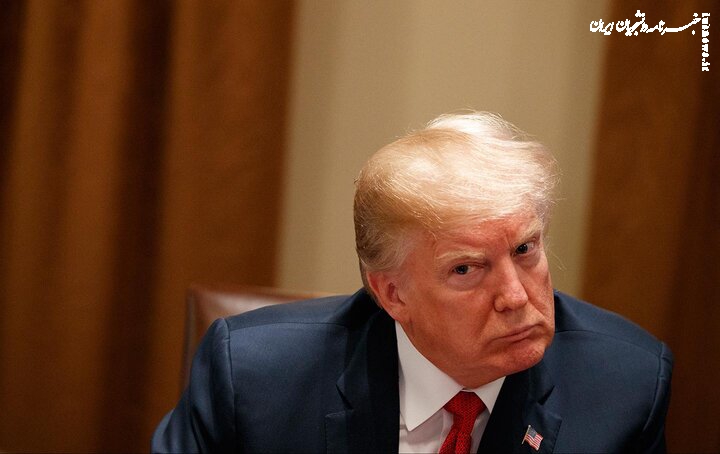
to report «iusnews»; Recently, Steve Witkoff, Trump’s special envoy, in an interview with Fox News, spoke of a kind of frustration and astonishment on the part of the US president—astonishment at why Iran, despite extensive pressure, repeated threats, and displays of military power, has not been willing to back down. This very “astonishment” alone carries a clear message: in the minds of Trump and his team, Iran was supposed to behave like some weaker states in the international system—countries that alter their calculations at the first wave of economic pressure or military threat and, to reduce costs, relinquish part of their strategic interests. But this perception was from the outset built upon a false assumption.
The core problem in Washington is not a shortage of instruments of power, but a misreading of the nature of the opposing side. The US government has based its actions on the assumption that any country, when faced with a combination of crippling economic pressure and sustained military threat, will sooner or later submit. The dispatch of aircraft carriers to the region, the deployment of advanced fighter jets, highly publicized military exercises, and the simultaneous intensification of sanctions have all been defined within this logic: creating a situation of “maximum pressure” that would compel Tehran to accept unilateral demands.
Alongside these field measures, a narrative war also took shape. Many Western media outlets repeatedly spoke of Iran’s “deadlock,” “internal turmoil,” or “economic erosion,” attempting to convey the image that Tehran, under the weight of pressure, had no choice but to retreat. Even terms such as “strategic vertigo” were used to describe Iran’s situation—as if the decision-making structure in Tehran had become confused and was collapsing under pressure. Yet what has now become evident runs counter to this portrayal. The Americans themselves have reached a kind of confusion—confusion over why the equation they had designed in their minds did not work in reality.
When the president of the United States, possessing the most extensive network of military and economic power in the world, explicitly or implicitly asks why the other side has not yielded, that question speaks less about Iran and more about the collapse of a mental model in Washington. Trump entered foreign policy with a deal-making mindset. He viewed politics as an extension of business logic; a realm where increasing pressure ultimately forces the other side to concede, and a deal is reached. Within this framework, every actor has a “breaking point”—a point at which costs become so high that retreat appears to be the most rational option. But this analysis has encountered an obstacle in dealing with Iran.
The American magazine The Atlantic, in an analysis, likewise stated that Trump cannot understand why pressure and threats do not force Iran’s leadership to back down. In his view, every individual can be bought, and every nation can be brought to the table through a combination of threat and incentive. But this perspective falters when it confronts a structure that has built its identity on independence and resistance. Over more than four decades, Iran has made its strategic decisions not on the basis of fear, but on security, identity-based, and historical calculations. Within such a framework, surrendering to external pressure is not a tactical option, but is perceived as weakening the foundations of domestic legitimacy.
Iran’s power is not confined merely to military capability or missile capacity, although these components are part of the deterrence equation. What hollows out the policy of pressure from within is the linkage between political will, structural cohesion, and the historical experience of confronting external threats. Since its establishment, the Islamic Republic has faced a spectrum of pressures: imposed war, multilayered sanctions, military threats, and attempts at internal destabilization. This accumulated experience has created a kind of “strategic memory” that shapes decision-making. In such a context, increasing pressure not only does not lead to behavioral change but often results in strengthening internal cohesion.
The accumulation of US military equipment in the region was carried out precisely with the aim of intimidation and forcing Iran to retreat. The White House assumed that the tangible display of power would complement economic pressure and that the two levers together would place Tehran in a position of weakness. But the outcome did not proceed as expected. There was neither a sign of surrender nor a retreat from declared red lines. On the contrary, Iran sought to maintain relative calm at the diplomatic level while simultaneously emphasizing its deterrent capability, sending a clear message: threat is not an effective tool in this equation.
Meanwhile, claims by certain Western currents regarding Iran’s weakening do not fully align with realities on the ground. Iran has passed through difficult years, experienced the harshest sanctions in contemporary history, and yet has not retreated from its principles. Even complex efforts to create internal instability failed to produce a structural shift in the broad direction of its foreign policy. This behavioral consistency has now become a puzzle for American decision-makers. They expected that by intensifying pressure, they would achieve their desired outcome within a short timeframe; instead, they are now confronted with a reality that does not fit within their initial mental framework.
If the term “strategic vertigo” is to be used, it finds meaning more than anywhere in Washington, where part of the political elite still refuses to accept that the maximum pressure model is not necessarily effective against a country with Iran’s characteristics. Persisting with the same policy in the hope that “this time it will work” reflects less strength than an inability to reassess. A miscalculation becomes more dangerous when accompanied by excessive confidence in hard-power tools. The history of international relations has shown that misreading the will and capacity of the opposing side can lead to decisions that carry unpredictable costs.
The main issue, therefore, is not a lack of leverage at America’s disposal, but an inability to understand that not all actors respond to threats with a uniform logic. Iran has defined its path based on a combination of national interests, security considerations, and identity components. Experience has also shown that external pressure, rather than altering this path, has often reinforced it. As long as this reality is not acknowledged in Washington—that a policy based on pressure does not necessarily lead to submission—this confusion will persist.
The choice now facing the White House is clearer than before: either continue along a path that has thus far produced no result and has merely led to an accumulation of tensions, or reassess a perspective that views Iran through an oversimplified lens. Accepting the complexity of Iran’s power structure does not mean agreeing with it; rather, it is a necessary condition for any realistic policymaking. Without such reassessment, the cycle of pressure and resistance will continue to repeat, each time widening the distance between the two sides.
Ultimately, what is most evident today is the gap between perception and reality in American calculations. A perception that assumed increasing pressure would yield a swift and desirable outcome, and a reality that has shown the equations are more complex than can be solved by a single fixed formula. If this gap is not corrected, it will lead not only to greater confusion but to more costly decisions. Iran has shown that it does not alter its path in the face of threats. Now it is Washington that must decide whether it is prepared to reassess its assumptions or continue to insist on a model whose effectiveness has come into question.
