


to report «iusnews»; You can usually tell where the dog came in by looking at the floor. There’s a paw print by the back door, another halfway to the kitchen and a suspiciously clean patch where somebody has had a go with a tea towel. With a cat, the evidence might be one lifted thread in the corner beside the sofa. Two different problems, even if both rugs were sold as suitable for busy homes.
Choose a rug for what happens in that part of the house. The runner that gets wet twice a day has a different job from the rug beside the sofa where the cat sleeps. Start there and the choice gets a lot easier.
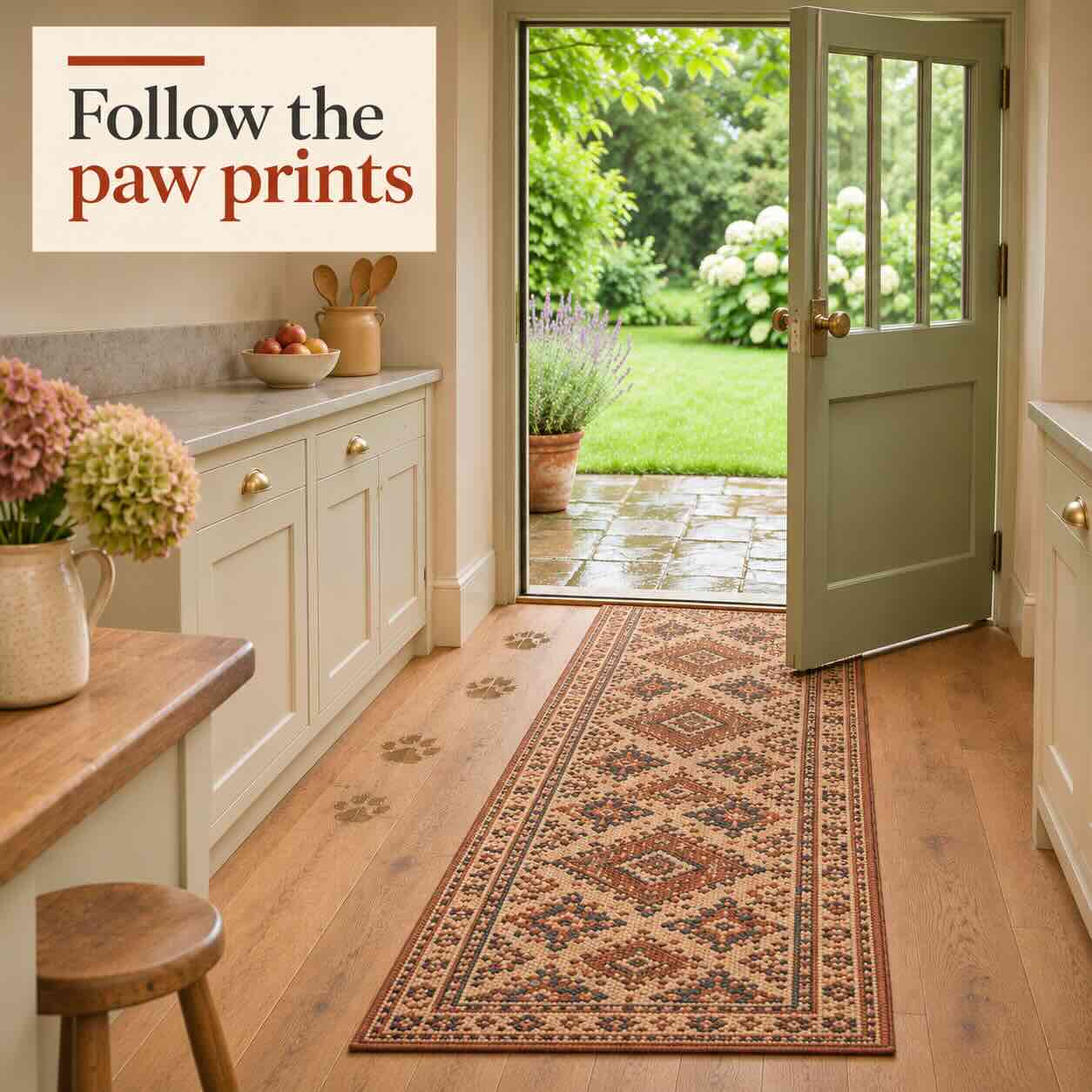
Follow the paw prints
For the route from the garden door to the kitchen, a low-profile runner makes sense if you can lift and clean it easily. Look at the stretch of floor your dog actually crosses and measure that. A runner can cover the busy strip while leaving the rest of the floor clear. If the back door swings over it, allow room for the full thickness of the rug and any pad underneath. It’s worth opening the door over the proposed spot before you order.
A doormat at the threshold gives you somewhere to pause and towel wet paws. Start the runner a little farther in if there’s space. You can then deal with the worst of the grit in one small area. If you only have room for one piece, check how easily you can pick it up to shake it out or clean it.
Around a dining table, there’s also the business of pulling chairs in and out. A fairly flat surface makes that easier, especially if the dog likes to lie under the table at mealtimes. Pull out a chair as far as you normally would and check where its back feet land. A rug edge right under those feet can catch as you get up.
In the sitting room, think about where your pet settles. If the dog always naps by one end of the sofa, put the bed where it can be lifted for a quick vacuum. It sounds obvious until you’ve bought a huge rug and tucked half of it under the furniture. If you want a softer rug in there, you can still put something easier to lift along the route from the door.
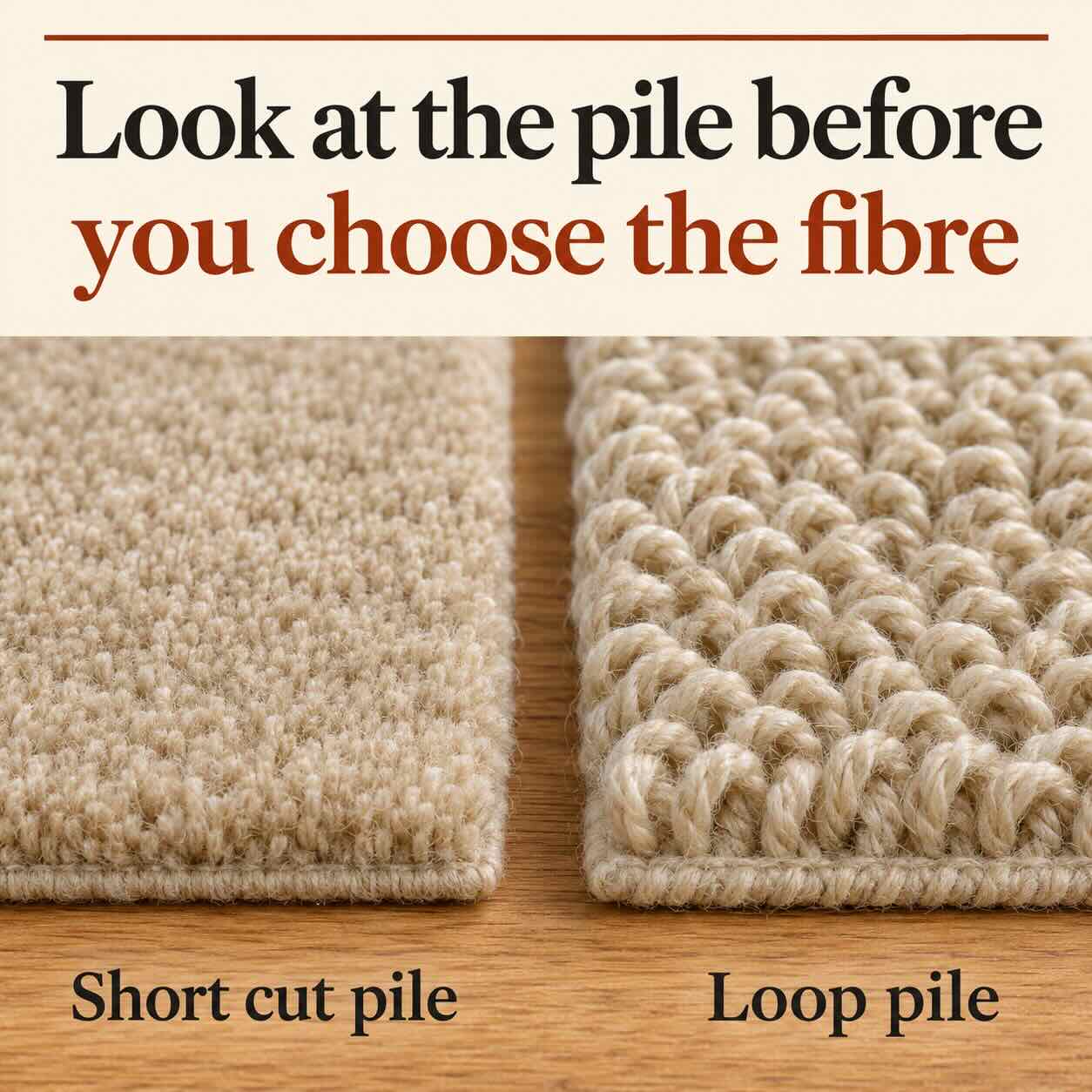
Look at the pile before you choose the fibre
If claws are the problem
Watch the loops.
A cut-pile rug has individual yarn ends on the surface. A loop-pile rug has little arches of yarn, which give a claw something to hook into. If your cat already snags a knitted throw, have a close look at the rug’s surface and edges before picking a chunky loop or long fringe. A short cut pile or a tightly woven flatweave is a sensible starting point. Ask for an edge photo if the listing only shows the rug from across the room.
Polypropylene is a reasonable material to look at for an everyday rug, especially in a short pile with care instructions you can follow. Wool can feel lovely in a room with a pet that’s reliably house-trained, provided you’re happy with the care that particular rug needs. In either case, check how the surface is made as well as what it’s made from. Two rugs made from the same fibre can have very different textures and edges.
If your cat keeps going back to the same corner, give it a scratching surface beside that spot. Cats Protection suggests a scratching pad for cats that prefer horizontal surfaces such as carpets. In that case, a pad next to the rug may get more use than a tall post tucked away behind a chair.
If fur is the daily job
For a dog that sheds all year, picture vacuuming the rug on an ordinary Wednesday. On a short, close surface, loose hair is usually easier to reach than it is in a deep shag. With a longer pile, you may be happy to spend a bit more time lifting hair if the feel underfoot is what drew you to it. Check the rug maker’s instructions for which vacuum head to use, particularly around loops or fringe.
Colour changes how soon you notice the fur. Have a look at the hair that actually comes off on your sofa or clothes. Pale strands show up on a solid dark rug, and dark strands can stand out against a plain cream one. A soft fleck, faded print or pattern with several nearby shades can make loose hairs less obvious between cleans. If you have pets with different coats, a mid-tone pattern is a useful place to start.
Think about which part of the pattern will be on show. A busy centre can be forgiving under the coffee table, while a broad, pale border shows every paw print where the dog walks in. The top-down photo helps here. Look at it in the size you’re considering and picture where the sofa, doorway and favourite napping spot fall.
Work out how you’ll clean up an accident
A rug described as easy to clean might have a surface you can spot-clean. A machine-washable rug gives you a different option. If that’s the feature you’re paying for, check what goes in the machine. Some designs have a removable cover, while others go in as a whole rug. Look up the manufacturer’s guidance for your chosen size and check your washer’s capacity. A small runner and the biggest rug in the same design can have different requirements.
If a rug is sold as stain-resistant, read what the description says about its backing too. A finish on the face may make a mark easier to lift. Whether liquid reaches the floor depends on the whole rug. Ask the retailer what the backing is designed to do if protecting the floor is part of the reason you’re buying it.
Then think about drying. A rug that needs to air-dry takes up space, and a large one can be awkward to move when it’s wet. For a puppy that regularly has an accident in one area, a washable piece you can lift on your own can be more useful than a single oversized rug. It may also make sense to leave the bit under the water bowl bare so you can wipe it after a particularly enthusiastic drink.
Blot a fresh spill promptly with a clean white absorbent cloth. Then follow the care directions for that rug. If liquid has gone through, check the back, the underlay and the floor as well. Treat them according to their own care instructions and give the area time to dry before putting the rug down again. For a delicate rug or a stain that’s already set, ask a rug cleaner who works with that fibre about the best next step.
Pay attention to the backing and edges
A runner has a habit of creeping towards the skirting board when there’s a well-used turn by the kitchen door. On a smooth floor, check the backing and whether the rug needs a separate grippy underlay. Choose one suitable for your floor finish and follow its sizing instructions so it sits under the edges. If you plan to wash the rug often, find out how to clean the underlay too. That small question matters when a spill reaches both layers.
Look at the corners in customer photos if you can find them. Reviews from people who’ve used the rug for a while are particularly helpful here. A comment about an edge lifting on laminate or a runner needing an underlay tells you something you can use. Before ordering, work out the cost with the pad included and check what the retailer says about the total thickness. For a narrow hallway, a small difference can decide whether you can open the door freely.
Three beUNIQ rugs to compare
beUNIQ carries washable runners, patterned flatweaves and low-pile designs for larger rooms. Its hallway collection includes narrow runners, and the living-room range has modern patterns and Persian-inspired designs in larger sizes. There’s room to pick a look you like within the type of rug you need.
The Origins Washable Windsor is a good one to look at for a hallway or kitchen that needs regular cleaning. Its floral design has blue, maroon and green accents, and beUNIQ lists a 67 × 200 cm runner as well as rectangular sizes. The care instructions specify a 30°C machine wash and line drying. If the kitchen and hall open into one another, you can look at the runner and the smaller rectangle in the same design, then choose the shape that suits each space.
For a flatter surface with a more understated pattern, look at the Origins Highland Check Navy. It’s a navy and grey recycled PET flatweave with knotted fringe, listed as machine washable. The 80 × 150 cm rectangle gives you a smaller option for an entrance with room for a rug but little space for a long runner. If your cat plays with fringe, the edge photos are worth a look.
The Seville Oriental Area Rug in Cream & Red is worth a look if you want a bigger pattern in the sitting room. The listing gives a 5 mm pile and machine-woven polypropylene construction, with rectangular sizes including 150 × 225 cm and 200 × 300 cm. Compare those sizes against your seating layout and read the care notes if you’re planning to use it in a busy spot.
Browse beUNIQ’s hallway or living-room ranges with your measurements and floor type to hand. The retailer offers free UK delivery on orders over £50, so check the total for the size you’re considering.
For more examples and advice on claws, fur and accidents, read beUNIQ’s guide to the best rugs for homes with pets.
